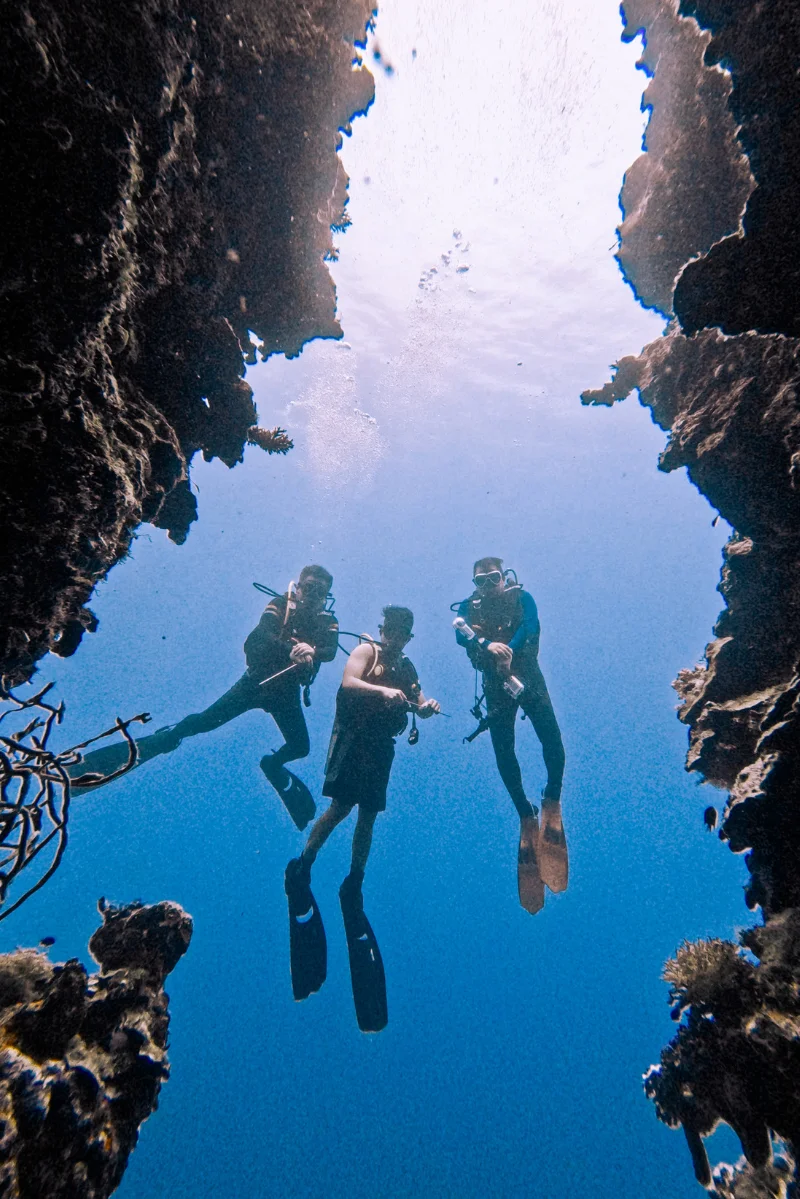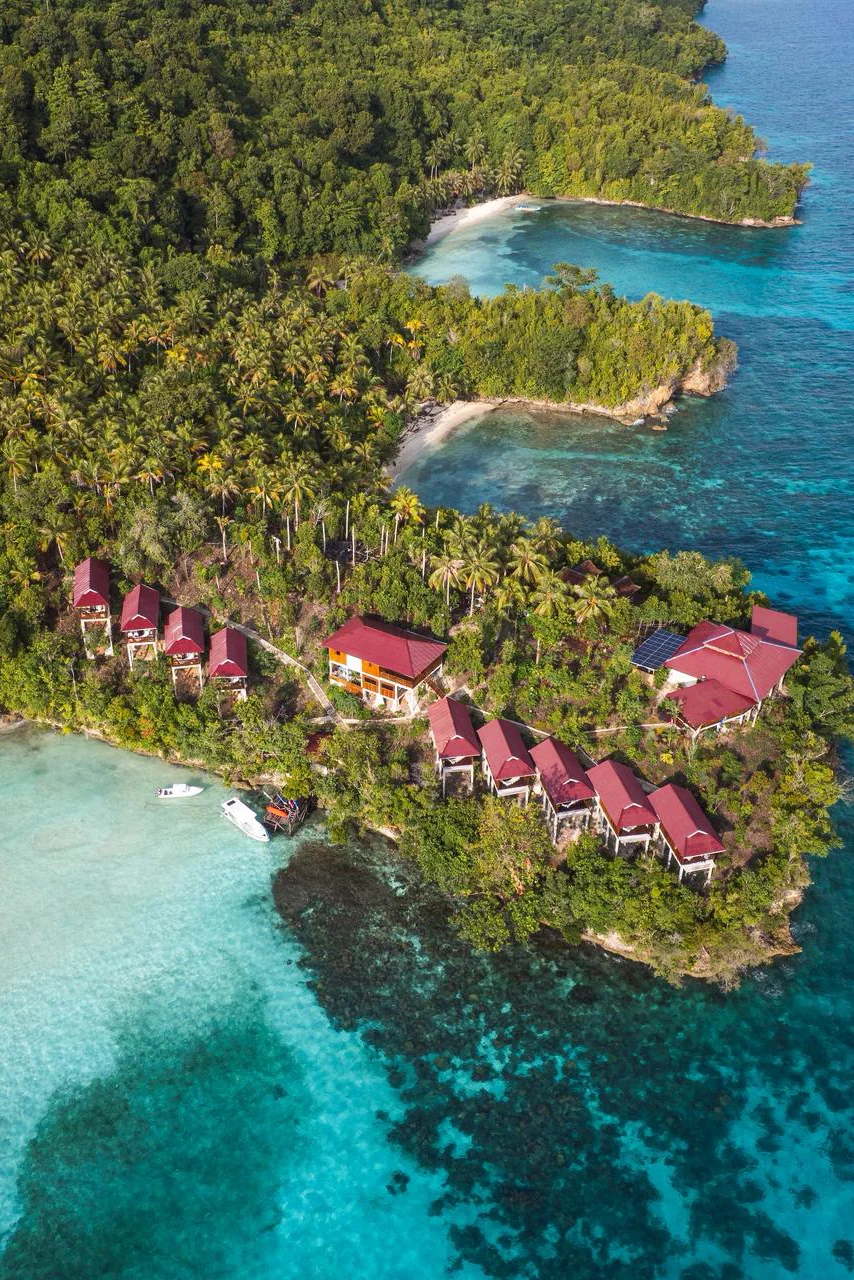
It would be easy to spend a week here underwater and never look up. That would be a shame, because Malenge is one of the strangest and richest islands in Sulawesi, and almost none of it is fenced, fed or staged.
Here is what is waiting on land.
The animals that come to you
Babirusa — the island deer-pigs, with tusks that curve back through the snout — wander through the grounds looking for fallen fruit. Coconut crabs, the largest land crabs in the world and strong enough to open a coconut, come out around the resort after dark. Monitor lizards patrol the shoreline, and smaller lizards live on every wall and every path.
Look up into the big trees towards dusk and you may find a Sulawesi bear cuscus, a slow, thick-furred marsupial that lives in the canopy. Crested macaques move through the forest in troops, noisy and curious and usually heard long before they are seen. Tarsiers, pythons and fruit bats live here too, but they keep to themselves — ask the team where they have been seen lately.
And around ninety bird species share the island: sea eagles over the bay, hornbills in the canopy, kingfishers along the shore, and a dawn chorus you will not sleep through.
The two-hour trail to Malenge Village
There is no trailhead to find and no transfer to book. The path leaves from behind the resort and climbs gently into the trees; tell us at breakfast and someone from the team will walk it with you.
It takes about two hours through the forest, shaded almost the whole way — big trees, hanging vines, and the sound of birds and macaques somewhere above you. The ground is uneven and often damp, so closed shoes are worth it. The trail comes out at Malenge Village, on the other side of the island.
Pulau Papan and the Sea Nomads
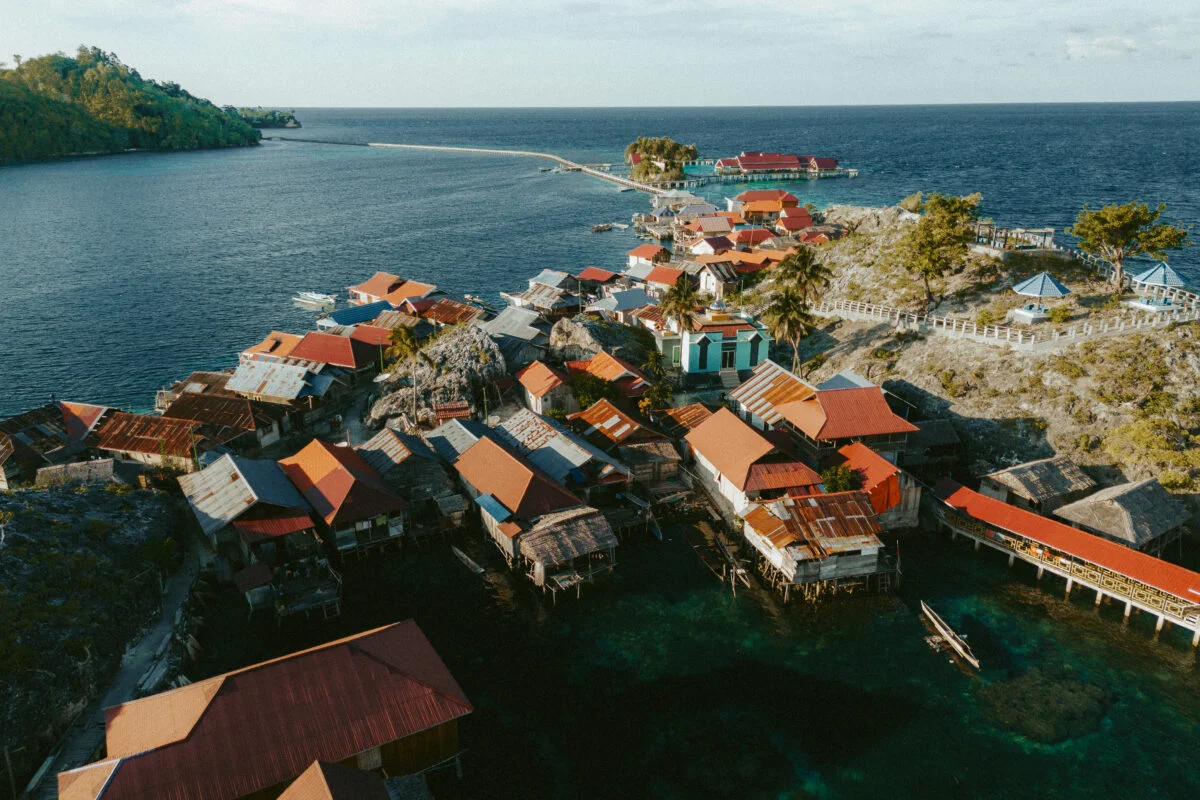
Ten minutes by boat from the resort is Kadoda, and from there a wooden bridge a kilometre long crosses the water to Pulau Papan, a Bajau village built on stilts above the sea. The Bajau are the Sea Nomads. They have their own language, and generations of diving have left them with unusually large spleens — a genetic adaptation, not a trained skill, that lets them hold their breath for up to thirteen minutes.
It is a village, not an attraction. Ask before you photograph people, dress as you would anywhere someone lives, and let the visit be a visit.
The lake with the stingless jellyfish
Malenge also has a jellyfish lake — one of only three like it in Indonesia — where you can swim among thousands of jellyfish that cannot sting you. It is a full day out, usually combined with Karina Beach and California Reef.
Fins stay on the boat, sunscreen stays off, and nobody lifts a jellyfish out of the water. They are fragile, and they are the only reason the lake is worth the trip.
Good to know
- Jungle trail
- About 2 hours from the resort to Malenge Village — closed shoes, walked with a guide on request.
- Wildlife
- Wild and unfenced — some days you see everything, some days you just see the forest.
- Pulau Papan
- 10 minutes by boat to Kadoda, then a 1 km wooden bridge across the water.
- Jellyfish lake
- One of only three stingless-jellyfish lakes in Indonesia — a full day out.
- Best hours
- Early morning and dusk for the animals; any time for the trail.
- Prices
- Free or on request — tell us the day you have in mind.
None of it needs booking weeks ahead. Tell us at breakfast what you feel like doing, and we will make it happen that day or the next.